


2 items, RM 698.069
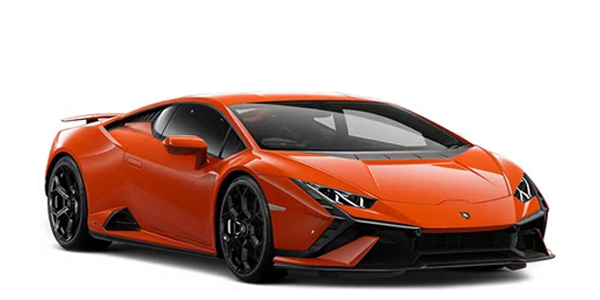
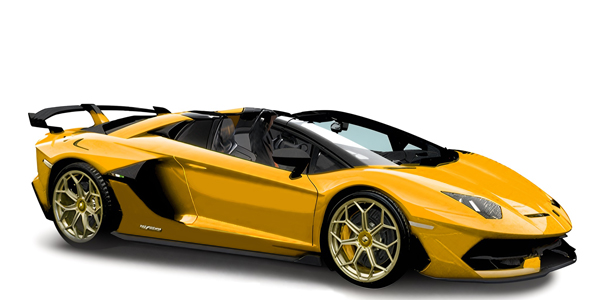
The Huracán ("hurricane" in Spanish, pronounced "hooh-rah-KAHN") is Lamborghini's most affordable model -- but, since Lamborghini really only makes two cars spread into about a dozen variations of convertibles and special editions, that's hardly a knock against. With a starting MSRP of $237.250; the word "affordable" is strictly relative.
Call it by its full name, Huracán LP 610-4, and you learn a little more about it. "LP" refers to a longitudinal engine configuration, which means the rear-mounted, 5.2-liter V-10 sits lengthwise along the same axis as the car. The numbers, meanwhile, come from the 610 metric horsepower delivered to the ground through all four wheels (thus, 610-4). If you prefer old-school, American horsepower, you're looking at an ever -so-slightly more tame 601. But, really, once you get over 600, what's an extra 10?
A seven-speed, dual-clutch gearbox delivers rapid-fire shifts controlled by a pair of paddles behind the flat-bottomed, leather-wrapped steering wheel. This wheel and the pair of pedals on the floor are about the only interior controls that you might label "conventional." Everything else looks like it escaped from the cockpit of a decommissioned F-117 stealth fighter -- or, perhaps more precisely, the mind of a big kid with a poster of an F-117 on his wall.
Over 600 horsepower in a car that weighs some 3,135 pounds makes for an exciting combination regardless of platform. But it's how the Huracán delivers that power that makes driving this machine a real delight. Again, the car features an all-wheel drive system, a series of electronically monitored differentials ensuring all the engine's torque gets where it belongs.
AWD systems in lesser cars can result in un-fun handling dynamics, often vague-feeling front-ends and understeering habits that leave drivers longing for the simpler days of engine in the front and power going out the back. Not so with the Huracán. Put your right foot down midcorner and you'll have no doubt the V-10 is directing the bulk of its fury to the meaty rear tires. The same can be said on a hard launch, the car squirming and squatting as it fights for traction, always feeling controlled -- but only just.
It's an engaging drive, more so than you might think given the AWD footing and German parentage. Even with the various electronic stability control nannies enabled, the Huracán wags its tail like a happy puppy on hard acceleration and makes you feel like a part of the experience. However, it will also cut power to save you from spinning into the ditch, just in case you're a little slow on the wheel.
The engine is held at the optimum RPM for a hard launch, barking and blatting and chattering away until you release the brake and the world ahead suddenly enters your peripheral vision.
Turn off all the governors and the car is a beautiful, balanced machine, delivering its power with a soaring rush as you work toward that 8,500RPM redline. We're seeing more and more big-power cars switching over to turbocharging, and so the naturally aspirated Huracán is a real plus, not only when it comes to engine responsiveness but also note. This V-10 wants to be heard, and it's a charming, brutish song it sings -- especially when you engage launch control, which requires flipping a few switches and, dauntingly, disabling traction control. Next, come to a complete stop, keep your left foot hard on the brake and floor the gas. The engine is held at the optimum RPM for a hard launch, barking and blatting and chattering away until you release the brake and the world ahead suddenly enters your peripheral vision.
Zero to 60 in 3.2 seconds is fast, but the way this car delivers it makes it feel quite different. It's when you're nearly at 60 that the car seems to surge forward, those 601 horses really entering their stride. The car turns into a rocket ship at this point, but unless you have a long, closed road ahead -- or a general disregard for the sanctity of your license -- you'd best lift the throttle well before the 202 mph top speed.
| Acceleration : | 0-60mph: 3,2 secs |
| Curb Weight : | 3135lbs |
| Top Speed : | 202mph |
| Power-to-Weight Ratio : | 423bhp/ton |
| Platform : | Lamborghini Modular Sports Car Platform |
| Suspension : | Double Wishbone with Magneto-Rheological Dampers |
| Active Aerodynamic System : | N/A |
| Brakes : | Carbon Ceramic Disc Brakes |
The Lamborghini Huracan LP 610-4 has a combined fuel economy of 12.5L/100km. This translates to approximately 18.7 miles per gallon (MPG). In city driving, it's likely to get around 13 MPG, while on the highway, it could achieve 18 MPG. (Check details on Lamborghini Huracan MPG)
Depending on your proclivity toward silly switchgear and unusually shaped buttons, this cockpit design will either be a very good or a very bad thing. For example, to start the car you flip up a crimson safety switch and stab at the "START" button hidden beneath -- a motion that will give you visions of releasing precision-guided weaponry. Many of the rest of the buttons and controls are curiously angled, as if to reduce their radar signature, and the dashboard switches are arrayed in a similarly aeronautical arrangement.
For the first week, the cockpit feel will make you and anyone in the passenger seat smile like a giddy 10-year-old, but it's easy to see that these details will lose their charm after a time. I wonder whether this particularly distinctive interior will be a notable, loved part of this car's charisma in the long-term, or whether it will at some point in the future look as tacky and dated as '80s digital dashboards do today.
The overall interior design language is a strong signature for Lamborghini and makes the Huracán feel both incredibly sophisticated yet somewhat cheeky.
2 review(s) for 2024 Porsche 718 Spyder RS
| Air Conditioner : | |
| AntiLock Braking System : | |
| Power Steering : | |
| Power Windows : | |
| CD Player : | |
| Leather Seats : | |
| Central Locking : | |
| Power Door Locks : | |
| Brake Assist : | |
| Driver Airbag : |
Infotainment and Connectivity: Thankfully, all this dashboard flair comes backed by a remarkably comprehensive infotainment system -- a version of Audi's MMI. A spinny knob situated between the seats makes selecting media inputs, entering a navigation destination and toggling car settings easy and distraction-free.
A massive LCD panel sits behind the steering wheel to show your entertainment information. By default, that panel pretends to be a traditional dash with predictable information including vehicle speed and engine RPM. But cycle through a few options and you can replace all that with a full navigation view, pushing speed and RPM off to the side. The constantly changing display also gives you vehicle information, tells you whether you've lifted the nose and, of course, keeps you informed about the current fuel level -- that is, if you don't mind learning a little Italian. (The main systems all change over, but the gauge labels remain in Italian: gas will always be "benzina.")

Stephany Lee – March 16, 2025
Again, the Lamborghini Huracán LP 610-4 starts at $237,250. Unlike many supercars in this price range, base price buys you a reasonably equipped machine. Our tested car came with a wide selection of options onboard, including navigation ($3,300), the very-necessary rear-view camera system ($3,900), the similarly mandatory nose lift ($6,900) and heated seats ($2,800), with a variety of other visual enhancements, resulting in a final price, after destination, of $282,125.
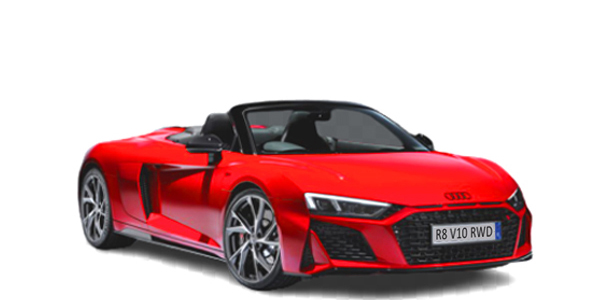
Cheap? Of course not. But perhaps what buyers of the Huracán will need to overcome even more is the fact that their car, at least mechanically, is incredibly similar to that much cheaper Audi R8 V-10. No, the Audi doesn't look or sound as good, and it certainly doesn't inspire the same giddy feeling of delight the first time you flip up that red toggle and punch the starter button.
Stephany Lee – March 16, 2025
Well, it's just a left record from a couple of years ago, though.